Zhushan · Hubei · China
From rough to cabochon.
A closer look at the judgment behind a finished loose stone—from reading the rough and exposing color to choosing the orientation of an individual cabochon.
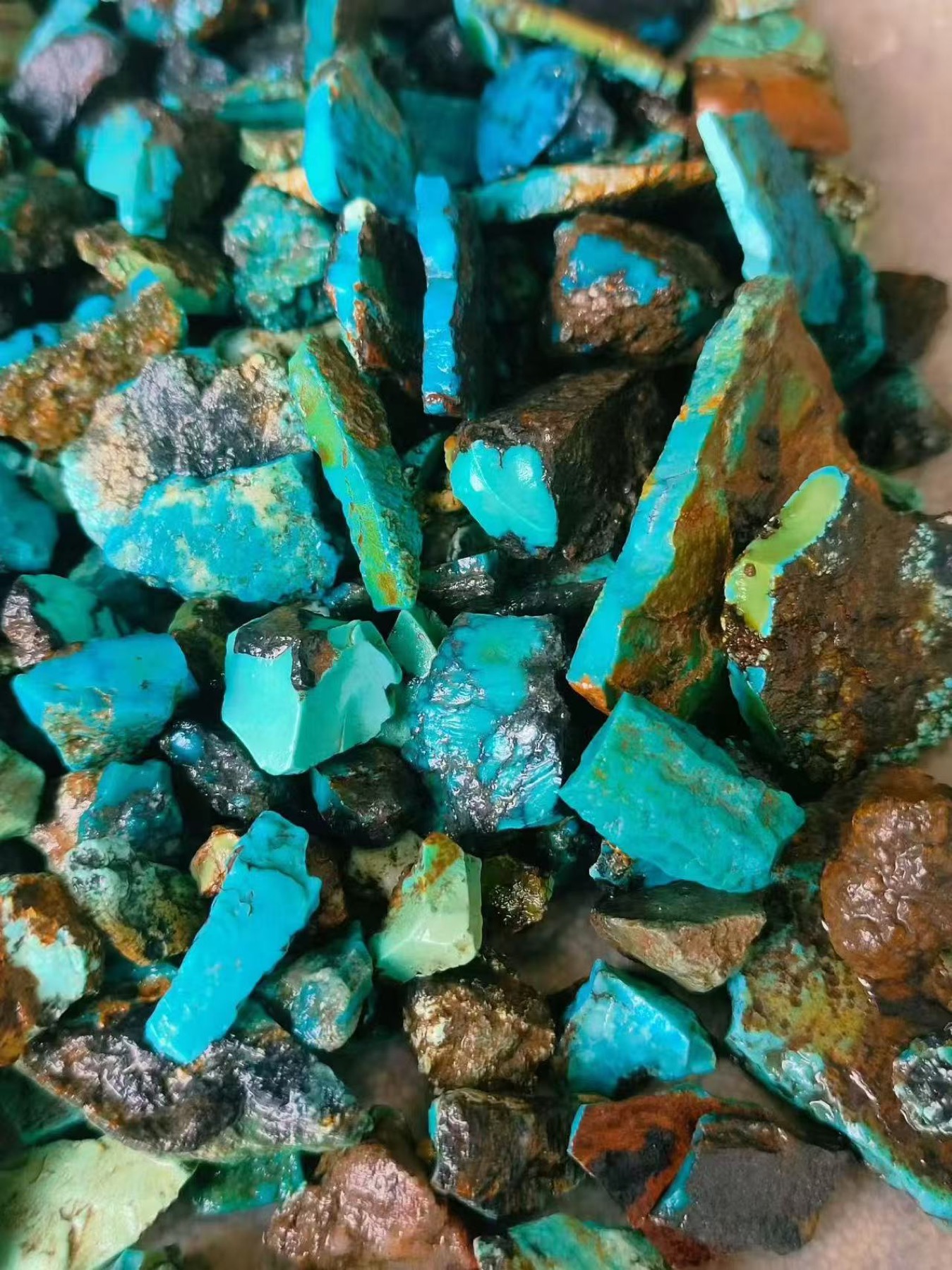
Material context
The work before the polish.
Oakwell Turquoise sells finished loose cabochons—not parcels of rough. These images are included to show the material decisions that precede the stones in our collection.
Color alone does not determine a successful cabochon. The cutter must consider the host rock, matrix, fractures, usable thickness, orientation, and the shape that best respects the material.
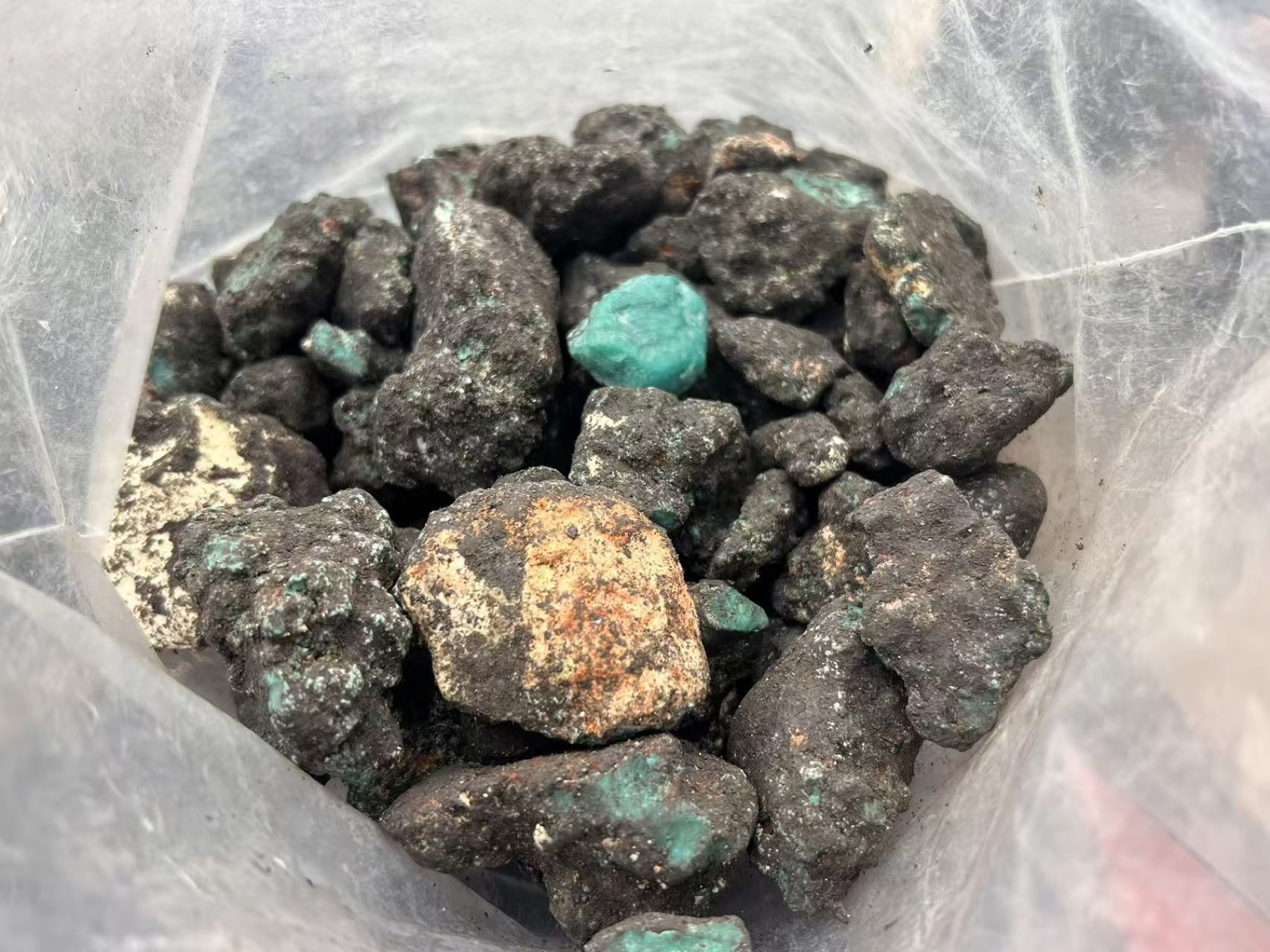
Reading the rough
Before cutting, the exterior may reveal very little. Color, host rock, fractures, and usable depth all influence what a cutter may recover.
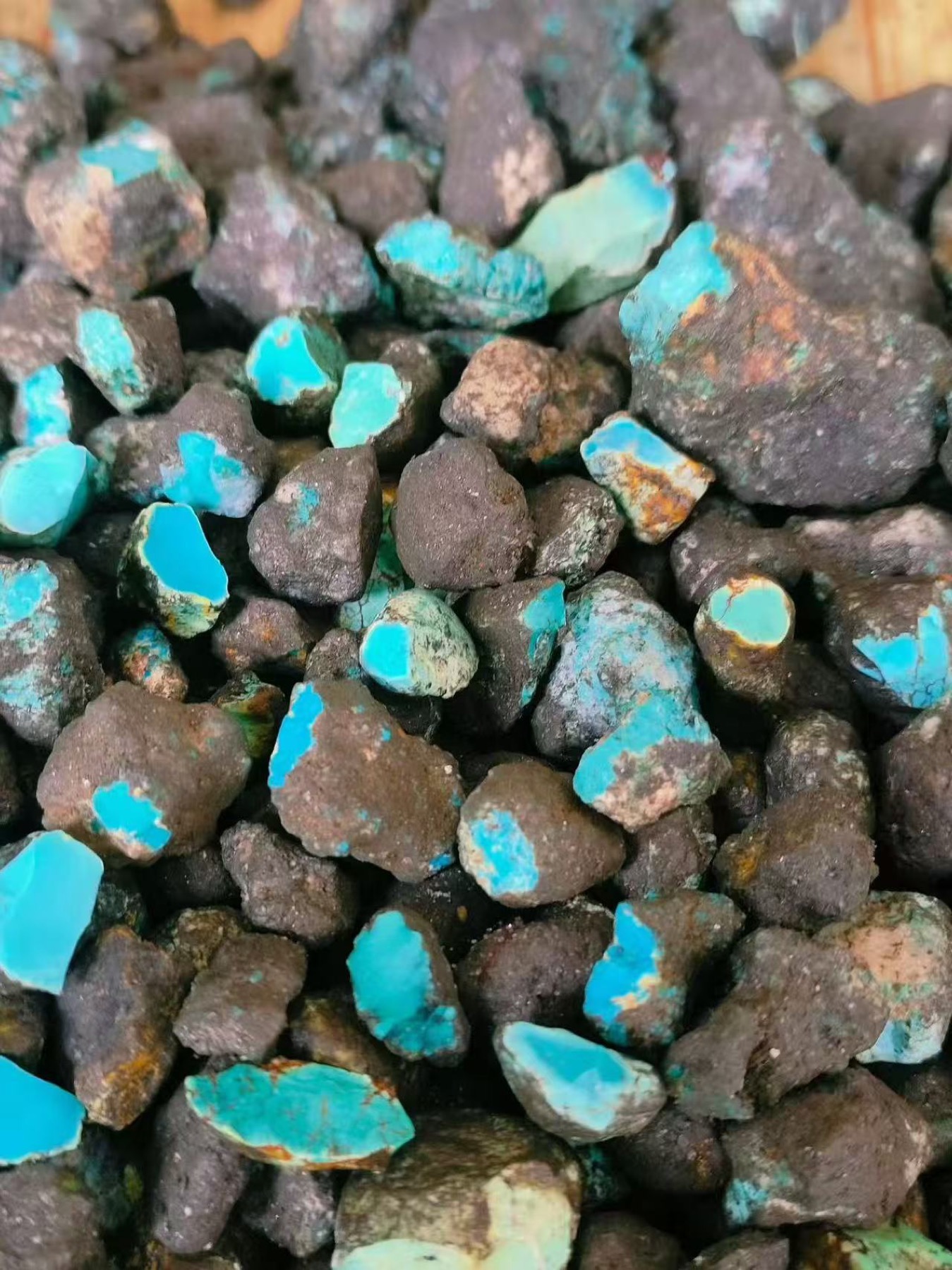
Opening a window
A small ground or cut area allows the interior color and structure to be assessed while preserving as much material as possible.
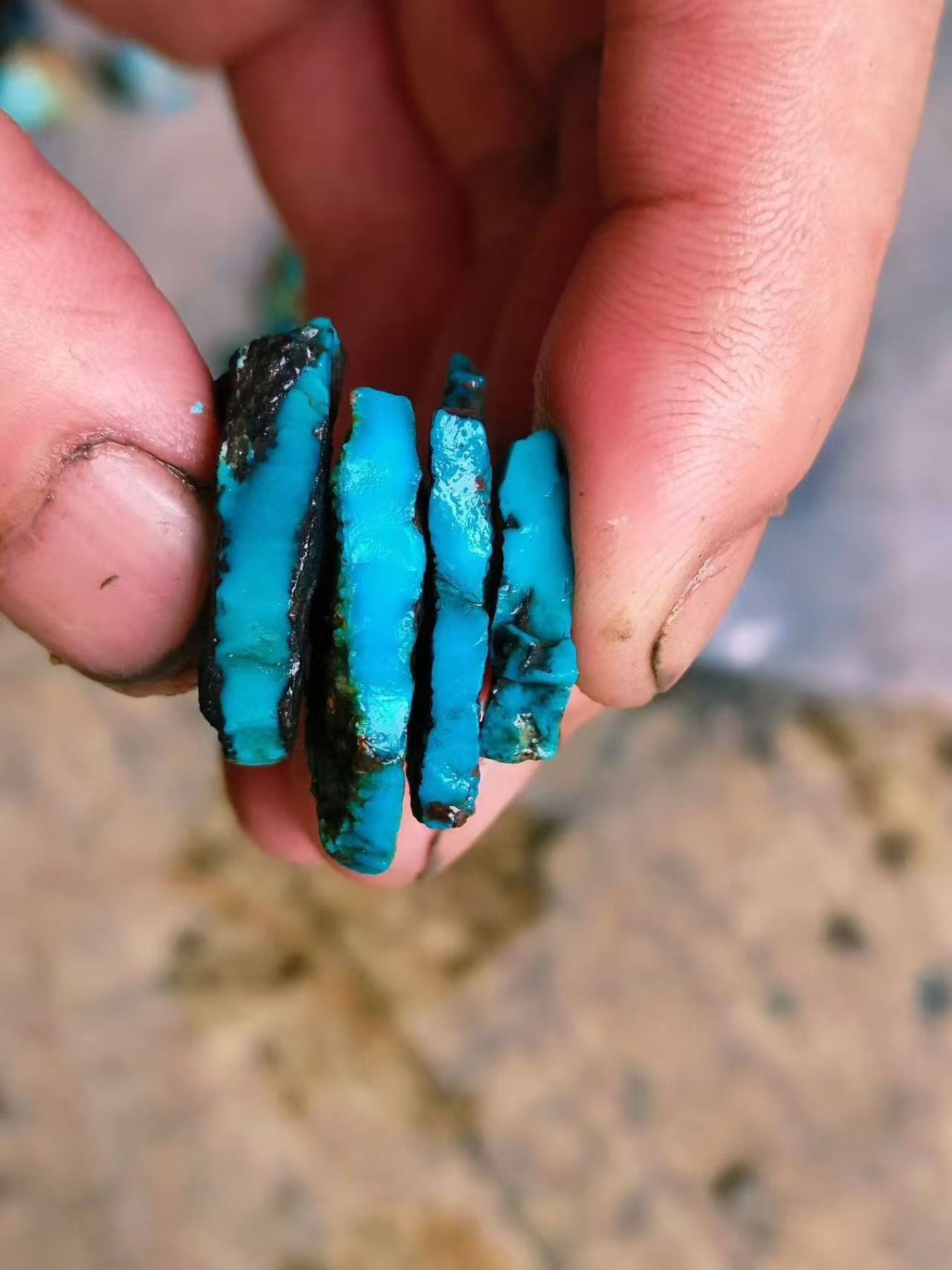
Following the seam
Thin sections make the relationship between turquoise and host rock visible. This stage helps determine orientation, outline, and potential dome height.
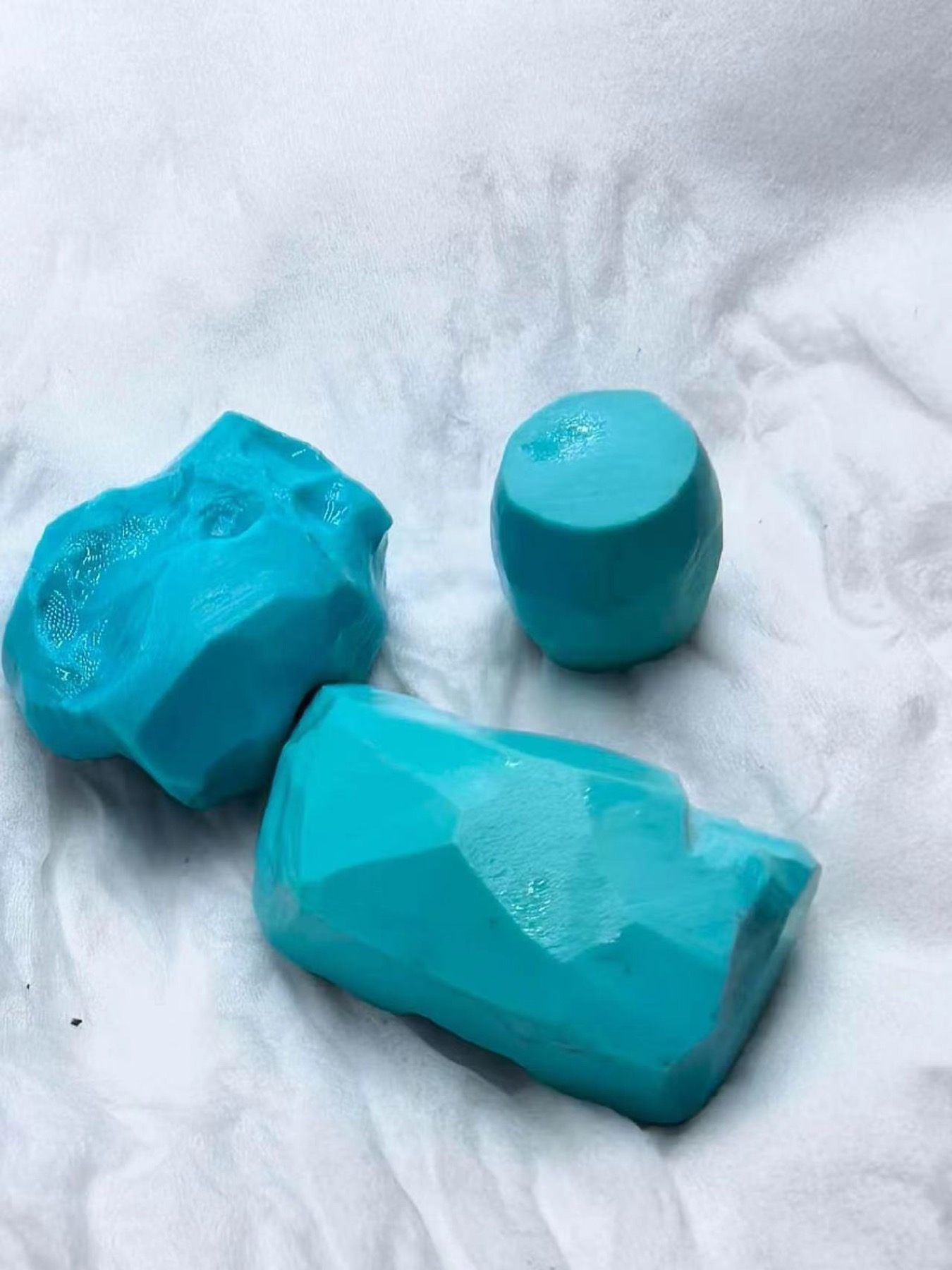
Removing the host rock
The rough is gradually reduced to expose usable color. Irregular forms are retained until the cutter understands the strongest possible yield.
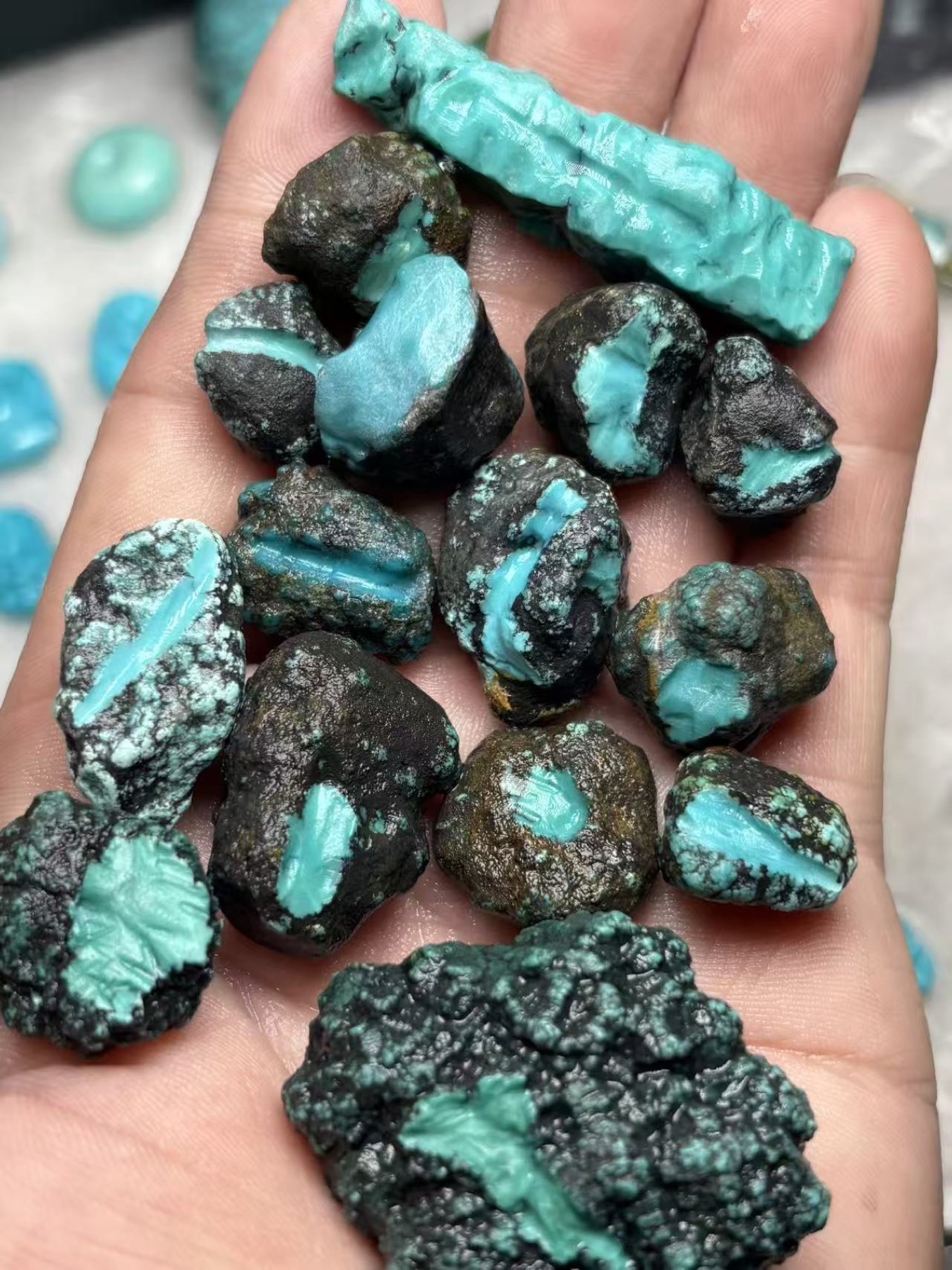
Selecting for a cabochon
Each piece is evaluated for color, matrix, stability, thickness, and shape before a cabochon outline is committed.
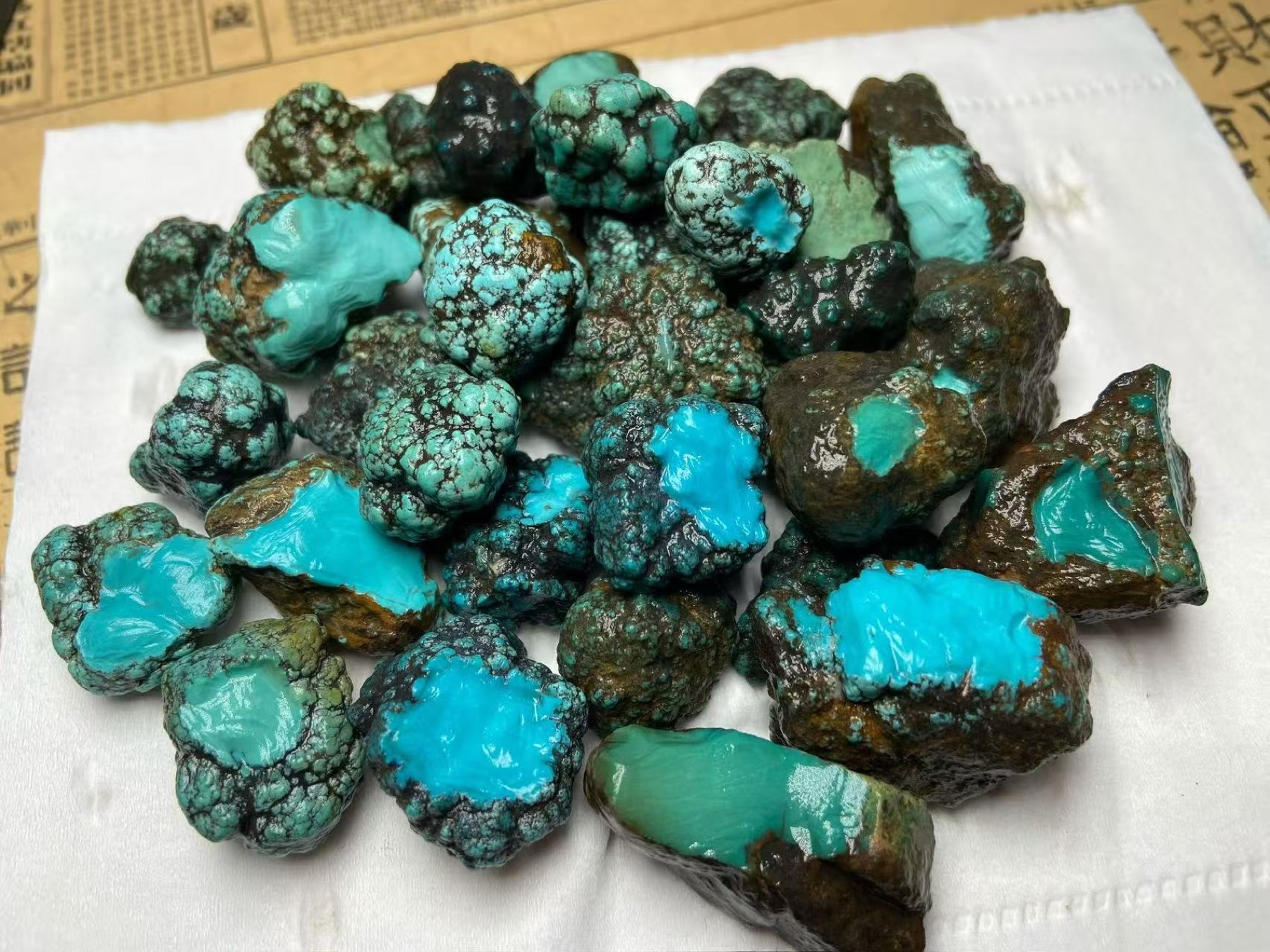
Every stone begins differently
Clean color, webbed matrix, pale blue-green material, and irregular natural surfaces demand different cutting decisions.
Image & origin disclosure
Context, stated precisely.
These process photographs were provided through our Zhushan, Hubei supplier network and are presented as contextual reference. They are not photographs of the thirteen finished stones before cutting, and they do not constitute independent mine-origin or treatment certification. Collection 01 is represented by our supplier as turquoise from Zhushan, Hubei, China.